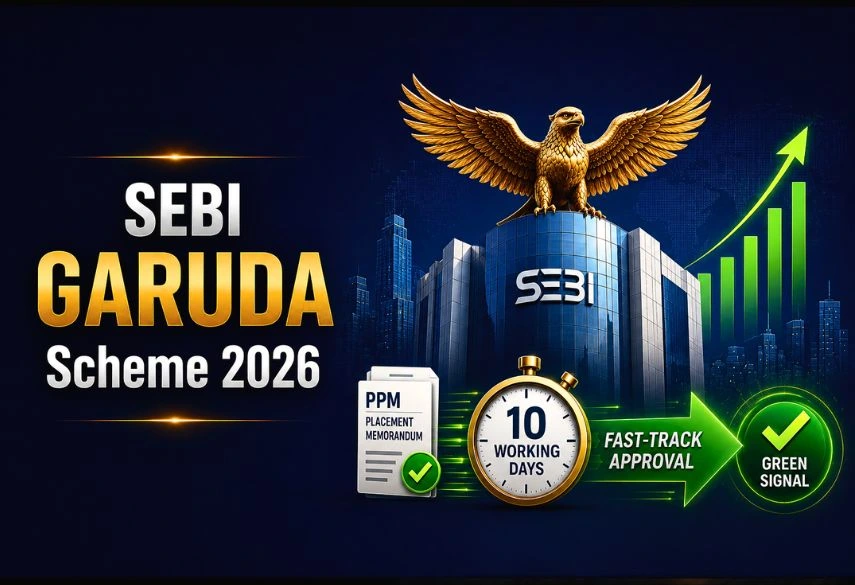
SEBI has approved a new route called PRIM - Portfolio Managers Route for Investing in Mutual Fund units that will allow portfolio managers to manage client portfolios using direct plans of mutual funds, ETFs, index funds and Specialised Investment Funds (SIFs).
One of the biggest changes under the SEBI PRIM rules 2026 is the minimum investment requirement. PRIM will have a minimum ticket size of ₹25 lakh, compared with ₹50 lakh for conventional portfolio management services (PMS).
SEBI has also capped the fixed management fee under PRIM at a maximum of 1% of the client's assets under management (AUM), while performance-based fees are permitted. In simple terms, PRIM is designed for investors who want professional management of an entire mutual fund portfolio without moving into a conventional PMS portfolio built around individual securities.
SEBI's Board approved these measures as part of a broader review of the Portfolio Managers Regulations. Investors should still check the final notified regulations and subsequent operational requirements before acting on the framework.
What Is SEBI PRIM?
PRIM stands for Portfolio Managers Route for Investing in Mutual Fund units.
Under this route, a portfolio manager can manage a client's money through direct plans of mutual funds, including:
- Actively managed mutual funds;
- Exchange-traded funds (ETFs);
- Index funds; and SIFs.
SEBI's Board decision specifies a minimum investment of ₹25 lakh for PRIM. An existing portfolio manager can offer PRIM as a separate investment approach, while an applicant intending to operate only within PRIM's permitted investment universe can seek a separate registration.
SEBI PRIM at a Glance
|
Particular |
Details |
|
Full Form |
Portfolio Managers Route for Investing in Mutual Fund units |
|
Minimum Investment |
₹25 lakh |
|
Eligible Investments |
Direct mutual funds, ETFs, index funds and SIFs |
|
Fixed Management Fee |
Maximum 1% of AUM |
|
Performance Fee |
Allowed |
|
PRIM-Only Manager Net Worth |
₹2 crore |
|
Affiliated AMC Exposure |
Maximum 25% |
|
SEBI Board Approval |
September 24, 2026 |
The important distinction is that the PRIM portfolio manager is not necessarily choosing individual stocks and bonds for the client.
Instead, the manager decides:
- Which mutual fund schemes belong in the portfolio;
- How much should be allocated to each category;
- How equity, debt and other eligible exposures should be balanced;
- When the portfolio should be rebalanced; and
- Whether a fund or allocation should be changed as circumstances evolve.
The underlying mutual fund manager continues to select the securities held within an individual scheme.
So there are effectively two layers of portfolio management: the mutual fund manager manages the scheme, while the PRIM portfolio manager manages the investor's overall mix of schemes.
Why Did SEBI Introduce the PRIM Route?
Many investors eventually accumulate a sizeable mutual fund portfolio containing large-cap funds, flexi-cap funds, index funds, debt funds, and other schemes. The challenge often shifts from simply "which fund should I buy?" to questions such as:
- How much should I allocate to equity and debt?
- Am I holding too many similar funds?
- Are my schemes overlapping?
- When should I rebalance?
- Should I replace an underperforming fund?
- How should the portfolio change as my goals get closer?
Investors can manage these decisions themselves or seek professional advice. However, conventional discretionary PMS has a higher investment threshold. PRIM creates another regulated route for investors seeking professional portfolio-level management of mutual fund-based investments.
The approved framework sets the PRIM minimum ticket size at ₹25 lakh, compared with the ₹50 lakh threshold generally associated with conventional PMS. Recent industry coverage has therefore described PRIM as a potential middle layer between DIY mutual fund investing and traditional PMS.

Key Features of SEBI PRIM Rules 2026
1. Minimum Investment of ₹25 Lakh
The minimum ticket size under PRIM is ₹25 lakh. This is one of the most important differences between PRIM and traditional PMS because it potentially opens professionally managed portfolios to investors who have accumulated significant financial assets but have not reached the conventional PMS threshold.
2. Investments Through Direct Mutual Fund Plans
PRIM portfolio managers can invest clients' funds in eligible direct plans of mutual funds, including ETFs, index funds and SIFs of Indian AMCs. Direct mutual fund plans do not carry the distributor commission embedded in regular plans, although investors still bear the applicable expense ratio of the underlying schemes.
3. Fixed Management Fee Capped at 1%
SEBI has approved a maximum fixed management fee of 1% of client AUM for PRIM. Portfolio managers may also use a performance-based fee model. This means investors must consider two potential layers of cost:
1. The fee charged by the PRIM portfolio manager; and
2. The expense ratios of the underlying mutual funds, ETFs, or other eligible schemes.
Example of PRIM Management Cost
Suppose an investor places ₹25 lakh under PRIM. If the portfolio manager charges the maximum 1% fixed management fee:
₹25,00,000 × 1% = ₹25,000 per year
This is only the fixed management-fee illustration. Actual total costs can differ depending on the portfolio manager's fee structure, performance-linked charges, statutory levies, and the expense ratios of the underlying investments. Investors should therefore compare the total cost, not only the headline PRIM management fee.
4. 25% Limit on Affiliated AMC Schemes
PRIM includes a prudential cap restricting investment in schemes of affiliated, group or associate AMCs to 25%. This is an important conflict-of-interest safeguard.
For example, if a portfolio manager has links to a particular asset management group, the manager cannot simply fill the entire PRIM portfolio with schemes belonging to that associated group.
5. ₹2 Crore Net-Worth Requirement for PRIM-Only Registration
An applicant intending to operate strictly within PRIM's permitted investment universe can seek separate registration, with a minimum net-worth requirement of ₹2 crore under the approved framework.
6. Performance-Based Fees Are Allowed
In addition to the fixed-fee model, SEBI's Board decision permits a performance-based fee modelfor PRIM.
Before signing up, investors should therefore understand:
- The fixed management fee;
- Performance-fee calculation;
- Applicable hurdle rate, if any;
- Frequency of fee calculation;
- Underlying fund expenses; and
- Any other applicable charges.
How Does a PRIM Portfolio Manager Work?
A PRIM engagement could broadly work in the following stages.
Step 1: Investor Profiling
The portfolio manager evaluates factors such as:
- Financial goals;
- Investment horizon;
- Risk tolerance;
- Existing investments;
- Liquidity requirements; and
- Overall financial circumstances.
Step 2: Asset Allocation
The manager determines how much of the portfolio should be allocated across eligible asset classes and strategies. Depending on the mandate, this could involve equity mutual funds, debt-oriented funds, index funds, ETFs, and eligible SIFs.
Step 3: Fund Selection
Instead of leaving the investor to compare dozens of schemes independently, the portfolio manager selects the schemes that fit the portfolio strategy.
Step 4: Portfolio Monitoring
The manager monitors the portfolio over time rather than treating fund selection as a one-time exercise.
Step 5: Rebalancing
As markets move, a portfolio's asset allocation can drift. The portfolio manager can rebalance allocations where required based on the mandate, investor circumstances, and portfolio strategy.
The value proposition of PRIM is therefore not merely "someone chooses mutual funds." It is portfolio construction and ongoing portfolio-level decision-making.
PRIM vs Mutual Funds vs Traditional PMS
Understanding the differences between these three approaches is essential.
|
Factor |
PRIM |
DIY Mutual Funds |
Traditional PMS |
|
Minimum Investment |
₹25 lakh |
Usually low |
₹50 lakh |
|
Portfolio Manager |
Yes |
No |
Yes |
|
Fund Selection |
Portfolio manager |
Investor/adviser |
Manager |
|
Asset Allocation |
Professionally managed |
Self-managed |
Professionally managed |
|
Rebalancing |
Manager |
Investor |
Manager |
|
Direct Stocks |
Not core PRIM route |
No |
Possible |
|
Customisation |
Yes |
Self-created |
Yes |
|
Additional Management Fee |
Yes |
Usually no |
Yes |
|
Investment Universe |
Fund-focused |
Mutual funds/ETFs |
Wider securities universe |
This comparison highlights an important point: PRIM is not simply another mutual fund. A mutual fund is an investment scheme. PRIM is a portfolio management route through which a professional manages a portfolio made up of permitted fund products.
PRIM vs Regular Mutual Fund Investing: What Is the Main Difference?
Suppose two investors both invest in the same flexi-cap mutual fund. Within that scheme, both investors participate in the same underlying fund portfolio according to the units they own.
With PRIM, the portfolio manager works at a different level. The manager may decide that a client's overall portfolio should contain:
- A certain percentage in a flexi-cap fund;
- Some allocation to index funds;
- Some debt exposure;
- An ETF allocation; and
- Another eligible strategy.
The manager can subsequently change that mix according to the investment mandate. Therefore, a mutual fund manager manages a fund, and a PRIM portfolio manager manages the client's portfolio of funds.
PRIM vs Traditional PMS
Traditional PMS generally has a broader investment universe and can directly hold securities depending on the investment strategy. PRIM is narrower because it is specifically built around eligible mutual fund products and related permitted fund structures.
The minimum investment also differs:
- PRIM: ₹25 lakh
- Traditional PMS: ₹50 lakh
SEBI's wider 2026 Portfolio Managers review also approved measures relating to IPOs, primary debt issuances, certain investment-grade unlisted debt, derivatives, and foreign securities for the broader PMS framework.
PRIM therefore sits within a larger overhaul of India's portfolio-management regulations.

Advantages of the SEBI PRIM Route
Professional Portfolio Construction
Investors can delegate fund selection, asset allocation and portfolio monitoring to a regulated portfolio manager.
Lower Entry Threshold Than Traditional PMS
The ₹25 lakh threshold makes the route accessible below the conventional ₹50 lakh PMS level.
Direct Plans
PRIM investments are built around direct plans of permitted mutual fund products.
Portfolio-Level Management
The focus is not just on choosing individual schemes but on how all the schemes work together.
Ongoing Rebalancing
Investors who do not want to continuously monitor allocation changes can delegate this responsibility to the portfolio manager.
Conflict-of-Interest Safeguard
The 25% prudential cap on affiliated/group/associate AMC schemes helps limit excessive concentration in connected fund houses.
Potential Disadvantages and Risks of PRIM
PRIM should not automatically be assumed to be better than managing mutual funds independently.
Additional Fees
An investor buying direct mutual funds independently avoids a separate PRIM portfolio-management fee. With PRIM, the investor may pay the manager in addition to bearing the expense ratios of underlying schemes.
The portfolio manager therefore needs to add enough value through allocation, fund selection, behavioural discipline and rebalancing to justify the additional cost.
No Guarantee of Higher Returns
Professional management does not guarantee that the portfolio will outperform the market, an index or a self-managed portfolio.
Investment returns will continue to depend on:
- Market conditions;
- Selected schemes;
- Asset allocation;
- Manager decisions; and
- The investor's time horizon.
Manager Selection Matters
The quality of the PRIM experience will depend substantially on the portfolio manager.
Investors should evaluate the manager's:
- Registration;
- Experience;
- Investment philosophy;
- Fee structure;
- Risk-management approach;
- Disclosures; and
- Reporting standards.
SEBI maintains records of registered portfolio managers that investors can use as part of their due diligence.
Who May Consider PRIM?
PRIM may be relevant for investors who:
- Have at least ₹25 lakh available under the applicable framework;
- Prefer mutual fund-based investing over direct stock selection;
- Want professional asset allocation;
- Do not want to continuously research and rebalance multiple schemes;
- Have accumulated several mutual funds and want portfolio-level oversight; or
- Want a professionally managed structure below the conventional PMS entry threshold.
Who May Not Need PRIM?
PRIM may be less compelling for investors who:
- Have less than the required minimum investment;
- Are comfortable managing a simple mutual fund portfolio themselves;
- Already receive suitable portfolio advice through another regulated arrangement;
- Want to minimise additional management fees;
- Prefer a passive, low-maintenance asset-allocation strategy; or
- Specifically want a portfolio dominated by directly held individual stocks or other securities outside PRIM's permitted universe.
The right choice depends on the investor's needs-not simply on whether PRIM is available.
What About Taxation Under PRIM?
Tax should be evaluated before choosing between PRIM, DIY mutual funds, and traditional PMS. However, investors should avoid assuming that every operational and tax consequence can be determined only from SEBI's September 24 Board announcement.
The exact tax impact can depend on factors such as:
- The underlying investment;
- The type of transaction;
- Holding period;
- Applicable tax law; and
- How the PRIM arrangement is operationalised.
Investors should review the final documentation and, where necessary, consult a qualified tax professional before investing.
What Should You Check Before Choosing a PRIM Portfolio Manager?
Before signing an agreement, ask:
- What is the manager's SEBI registration status?
- What is the investment philosophy?
- How are funds selected?
- How often is the portfolio rebalanced?
- What is the complete fee structure?
- Is there a performance-linked fee?
- What underlying fund expenses will apply?
- How is performance benchmarked?
- How much exposure can go to related AMCs?
- What reporting will the investor receive?
- What happens if the investor wants to exit?
- What risks are disclosed in the agreement?
The cheapest manager is not automatically the best, and the most expensive manager is not automatically the most capable. The focus should be on whether the service offers sufficient value after costs and risks.
Latest Status of SEBI PRIM Rules
SEBI's Board approved the comprehensive review of the Portfolio Managers Regulations and the introduction of PRIM at its meeting on September 24, 2026. The approved PRIM framework includes:
- ₹25 lakh minimum ticket size;
- Direct mutual fund plans, ETFs, index funds and SIFs;
- ₹2 crore net-worth requirement for PRIM-only applicants;
- 25% prudential cap on affiliated/group/associate AMC schemes;
- Maximum 1% fixed management fee;
- Performance-based fee option; and
- Specified segregation requirements between mutual fund distribution and PRIM activities, subject to the accredited-investor exception.
Because regulatory implementation can evolve after Board approval, investors and portfolio managers should check the latest SEBI notifications, regulations, and circulars before relying on operational details.

Conclusion
The SEBI PRIM rules 2026 could create a meaningful new option for investors who have built substantial mutual fund portfolios but want professional portfolio-level management without moving into a conventional ₹50 lakh PMS structure.
The biggest attraction is straightforward: a portfolio manager can manage a customised portfolio of direct mutual fund plans, ETFs, index funds and SIFs starting from the ₹25 lakh threshold approved by SEBI.
Investors should carefully evaluate the total fees, portfolio manager's expertise, investment philosophy, risk management, portfolio construction process, and expected value addition compared with simply managing direct mutual funds themselves.
PRIM potentially fills the space between DIY mutual fund investing and traditional PMS - but whether that professional management is worth paying for will ultimately depend on the quality of the manager and the needs of the investor.
(Sources: Livemint, Kotakneo, Business-standard, ET, SEBI, Moneycontrol)

.webp)

.webp)