A debt mutual fund is a mutual fund scheme that primarily invests in fixed-income and money-market instruments such as government securities, corporate bonds, treasury bills, commercial papers, and certificates of deposit. Instead of investing mainly in company shares, it lends money to governments, banks, and businesses by purchasing the debt instruments issued by them.
In this blog, we will cover the debt mutual fund meaning, working, types, benefits, risks, and taxation. Also, you will learn to evaluate debt mutual funds, mistakes to avoid, etc. Keep scrolling.
What Is the Meaning of a Debt Mutual Fund?
The debt fund meaning can be understood through a simple lending example.
Suppose a company wants to raise ₹100 crore to expand its operations. Instead of issuing shares, it may issue bonds and promise to:
- Repay the principal after a specified period.
- Pay interest at an agreed rate.
- Follow the terms stated in the bond agreement.
A debt mutual fund collects money from multiple investors and uses the pooled amount to purchase such bonds and other fixed-income instruments. Investors receive units of the fund in proportion to the amount they invest.
A professional fund manager decides which securities to buy, how long to hold them, and how to balance credit quality, maturity, and interest-rate sensitivity.

The value of an investor’s units is represented through the fund’s Net Asset Value, or NAV. The NAV may rise when the portfolio earns interest or bond prices increase. It may fall when interest rates rise, a security loses value or an issuer faces repayment difficulties.
Debt Mutual Fund at a Glance
|
Feature |
Details |
|
Primary investments |
Bonds, treasury bills, government securities and money-market instruments |
|
Main source of return |
Interest income and changes in bond prices |
|
Return type |
Market-linked and not guaranteed |
|
Risk level |
Usually lower than equity funds but varies by category |
|
Investment horizon |
From one day to several years, depending on the fund |
|
Liquidity |
Most open-ended schemes permit redemption on business days |
|
Suitable for |
Short-term goals, portfolio diversification and relatively conservative allocation |
|
Major risks |
Credit risk, interest-rate risk, liquidity risk and reinvestment risk |
How Do Debt Mutual Funds Work?
A debt mutual fund generally works through the following process:
1. Investors contribute money
Individuals and institutions invest in the scheme through a lump-sum investment, Systematic Investment Plan or another available transaction method.
2. The fund issues units
The investor receives units based on the applicable NAV.
For example, when an investor puts ₹1,00,000 into a fund at an NAV of ₹20, the investor receives:
₹1,00,000 ÷ ₹20 = 5,000 units
3. The fund manager builds a portfolio
The collected money is invested in eligible securities based on the scheme’s stated objective and category.
The portfolio may include:
- Central and state government securities
- Treasury bills
- Corporate bonds
- Non-convertible debentures
- Commercial papers
- Certificates of deposit
- Money-market instruments
- Floating-rate securities
4. The portfolio earns interest
Many debt instruments pay periodic interest, also known as coupon income. This income contributes to the fund’s returns after accounting for expenses and other portfolio movements.
5. Bond prices change
The market value of existing bonds may rise or fall depending on:
- Changes in market interest rates
- Credit-rating upgrades or downgrades
- Demand and supply
- Inflation expectations
- Liquidity conditions
- Remaining maturity
- The issuer’s financial position
6. The investor redeems the units
An investor in an open-ended debt scheme can generally place a redemption request on a business day. The applicable NAV, exit load and settlement timeline depend on the scheme and transaction rules disclosed by the asset management company. AMFI explains that open-ended schemes remain available for subscription and repurchase on business days at the applicable NAV. (AMFI India)
How Do Debt Mutual Funds Generate Returns?
Debt mutual fund returns mainly come from two sources.
Interest income
The bonds and money-market instruments held by the fund may pay interest. This interest accrues to the portfolio and contributes to its NAV.
Capital gains or losses
Bond prices move in response to interest rates, credit developments and market conditions.
When market interest rates fall, older bonds carrying higher coupon rates may become more attractive. Their market prices may rise.
When market interest rates rise, older bonds offering lower coupon rates may become less attractive. Their prices may fall.
Simple interest-rate example
Assume a fund holds an existing bond that pays 7% annually.
If similar new bonds begin offering 8%, investors may prefer the new bonds. The market price of the older 7% bond may fall to make its effective yield more competitive.
This relationship means debt funds can experience temporary NAV declines even when the underlying securities continue paying interest.
Types of Debt Mutual Funds in India
SEBI issued a revised circular on the categorisation and rationalisation of mutual fund schemes on 26 February 2026. Current SEBI industry statistics continue to identify 16 open-ended income and debt-oriented scheme categories.
The right category depends on the investor’s time horizon, risk tolerance and purpose.
|
Debt Fund Type |
Broad Portfolio Focus |
General Use Case |
Key Risk |
|
Overnight Fund |
Securities with one-day maturity |
Parking money for an extremely short period |
Low but not zero risk |
|
Liquid Fund |
Short-term instruments with maturity generally up to 91 days |
Short-term cash management |
Credit and liquidity events |
|
Ultra Short Duration Fund |
Very short-duration debt portfolio |
Goals of a few months |
Mild duration and credit risk |
|
Low Duration Fund |
Short maturity profile |
Short-term goals |
Moderate sensitivity compared with liquid funds |
|
Money Market Fund |
Money-market instruments |
Short-term treasury or surplus management |
Credit and reinvestment risk |
|
Short Duration Fund |
Short-duration bonds |
Goals of approximately one to three years |
Interest-rate and credit risk |
|
Medium Duration Fund |
Medium-duration portfolio |
Medium-term allocation |
Higher interest-rate sensitivity |
|
Medium to Long Duration Fund |
Medium-to-long maturity profile |
Investors with a longer horizon |
Greater NAV volatility |
|
Long Duration Fund |
Long-duration debt securities |
Long investment horizon and rate-cycle view |
High interest-rate sensitivity |
|
Dynamic Bond Fund |
Actively changes duration |
Investors relying on active rate management |
Fund-manager and duration risk |
|
Corporate Bond Fund |
Mainly high-quality corporate bonds |
Corporate debt exposure |
Credit-spread and issuer risk |
|
Credit Risk Fund |
Greater exposure to lower-rated corporate debt |
Experienced investors seeking higher yield |
Elevated default and downgrade risk |
|
Banking and PSU Fund |
Debt issued by banks, PSUs and specified institutions |
Relatively high-quality institutional debt exposure |
Concentration and duration risk |
|
Gilt Fund |
Government securities |
Sovereign credit exposure |
Significant interest-rate risk |
SEBI’s published industry data for 2026 lists these categories, including overnight, liquid, ultra-short, low-duration, money-market, short-duration, medium-duration, dynamic bond, corporate bond, credit risk, banking and PSU, gilt and floater funds. (Securities and Exchange Board of India).
Which debt fund category may suit different horizons?
The following is a general educational framework, not a personal recommendation:
|
Approximate Horizon |
Categories Commonly Evaluated |
|
One day to a few weeks |
Overnight funds |
|
A few weeks to three months |
Liquid funds |
|
Three to six months |
Ultra-short-duration funds |
|
Six to twelve months |
Low-duration or money-market funds |
|
One to three years |
Short-duration or selected high-quality bond funds |
|
Three years or more |
Corporate bond, banking and PSU, dynamic bond or gilt funds, depending on risk |
|
Long-term rate-cycle strategy |
Long-duration or constant-duration gilt funds |
An investor should not choose a category based only on the table. The fund’s actual portfolio, credit quality, duration, expense ratio, exit load and Riskometer must also be reviewed.
Debt Mutual Fund vs Fixed Deposit
The debt mutual fund vs FD comparison is important because both are frequently used by conservative investors. However, they have different return structures, risks and liquidity conditions.
|
Factor |
Debt Mutual Fund |
Bank Fixed Deposit |
|
Return |
Market-linked |
Predetermined interest rate |
|
Capital guarantee |
No |
Contractually repayable by the bank, subject to bank conditions and applicable insurance protection |
|
NAV fluctuation |
Yes |
No daily market-linked NAV |
|
Liquidity |
Most open-ended funds allow redemption, subject to applicable rules |
Premature withdrawal may be allowed with a penalty |
|
Credit risk |
Depends on portfolio securities |
Depends on the bank |
|
Interest-rate risk |
Present, especially in longer-duration funds |
Existing FD rate does not fluctuate after booking |
|
Professional management |
Yes |
Not applicable |
|
Expense ratio |
Applicable |
No mutual-fund expense ratio |
|
Deposit insurance |
Not available |
Eligible deposits are covered within DICGC limits |
|
Tax timing |
Generally arises when gains are realised, or income is distributed, depending on the option and investor |
Interest is taxable according to applicable tax rules |
DICGC currently insures eligible deposits, including principal and interest, up to ₹5 lakh per depositor per bank in the same right and capacity. This protection applies to eligible bank deposits, not debt mutual fund investments. (DICGC)
Choose an FD when:
- You require a predetermined return.
- You do not want market-linked NAV movement.
- Capital certainty is more important than flexibility.
- You understand the premature withdrawal conditions.
- You remain within the applicable deposit-insurance framework or accept the bank exposure.
Consider a debt mutual fund when:
- You can accept limited market-linked fluctuation.
- Your investment horizon matches the selected category.
- You require an open-ended investment structure.
- You want professional portfolio management.
- You need debt allocation within a diversified portfolio.
- You understand that returns are not guaranteed.
Debt funds should not be positioned as guaranteed alternatives to fixed deposits.
Benefits of Debt Mutual Funds
Portfolio diversification
Debt funds can complement equity, gold, cash and other assets within a diversified portfolio. Their performance drivers differ from those of equity investments.
Multiple categories for different horizons
Debt mutual funds range from overnight funds to long-duration schemes. This allows investors to select a category that broadly aligns with their time horizon.
Professional portfolio management
Fund managers monitor interest rates, issuer quality, liquidity, maturity and portfolio concentration.
Access to diversified debt instruments
An individual investor may find it difficult to build a diversified portfolio of government and corporate debt securities directly. A mutual fund provides exposure through pooled investments.
Liquidity in open-ended schemes
Most open-ended debt schemes allow purchase and redemption on business days, subject to the applicable NAV, cut-off rules, exit load and settlement process. (AMFI India)
Small starting amounts
Many mutual fund schemes accept relatively small initial or systematic investments. The exact minimum amount varies by scheme and transaction platform.
Systematic investment and withdrawal options
Depending on the scheme, investors may use:
-
Systematic Transfer Plans
-
Lump-sum investments
An SIP can support investing discipline and cash-flow planning, but it does not remove credit, liquidity or interest-rate risks.

Major Risks of Debt Mutual Funds
A debt mutual fund is not risk-free. Different categories can carry materially different levels of risk.
1. Interest-rate risk
Bond prices generally move in the opposite direction to interest rates.
When interest rates rise, the prices of existing fixed-rate bonds may fall. When rates fall, their prices may rise.
Funds holding longer-duration securities are usually more sensitive to interest-rate movements than funds holding short-maturity instruments.
2. Credit risk
Credit risk is the possibility that a bond issuer:
- Delays an interest payment
- Fails to repay principal
- Experiences a rating downgrade
- Faces financial stress
- Restructures its debt
A higher yield may sometimes indicate that the portfolio is taking greater credit risk. Investors should not select a fund merely because it has generated the highest recent return.
3. Liquidity risk
Liquidity risk arises when a security cannot be sold quickly at a reasonable market price.
During stressed market conditions, a fund may have to sell securities at a discount to meet redemption requests.
4. Reinvestment risk
When an existing security matures, the fund may have to reinvest the proceeds at a lower interest rate. This can reduce future portfolio income.
5. Concentration risk
A portfolio with significant exposure to a limited number of issuers, sectors or groups may be more vulnerable to an adverse event.
6. Inflation risk
Even when a debt fund generates a positive nominal return, inflation may reduce the investor’s real purchasing power.
7. Fund-management risk
A dynamic bond fund or actively managed duration strategy depends partly on the fund manager’s view of the interest-rate cycle. Incorrect positioning may affect performance.
8. Expense risk
The expense ratio is deducted from the scheme’s assets. A higher expense ratio can reduce the investor’s net return, particularly in categories where gross returns are relatively moderate.

How to Evaluate a Debt Mutual Fund
Do not choose a debt fund solely from its one-year return ranking. Evaluate the following parameters.
Investment horizon
Match the portfolio duration with the period for which the money can remain invested.
Using a long-duration fund for a near-term requirement can expose the investor to unnecessary NAV volatility.
Credit quality
Review how much of the portfolio is invested in:
- Government securities
- Sovereign-backed securities
- AAA-rated instruments
- AA-rated instruments
- Lower-rated instruments
- Unrated securities, where permitted.
A high average credit rating does not eliminate risk. Portfolio concentration and issuer-specific exposure must also be checked.
Yield to maturity
Yield to maturity, or YTM, indicates the portfolio’s approximate yield when the underlying securities are held until maturity, assuming scheduled payments occur.
YTM is not a guaranteed investor return because it does not fully account for:
- Expense ratio
- Portfolio changes
- Defaults or downgrades
- Entry and exit timing
- Reinvestment rates
- Investor taxation
Macaulay duration
Macaulay duration represents the weighted average time required to receive the cash flows of a bond portfolio.
It is also used to define several debt fund categories.
Modified duration
Modified duration estimates how sensitive a bond portfolio may be to interest-rate changes.
As a simplified illustration, a modified duration of four suggests that a one-percentage-point rise in yields could produce an approximate 4% decline in bond value before considering other factors. The relationship is an estimate, not an exact forecast.
Average maturity
Average maturity shows the weighted average remaining maturity of the portfolio’s securities.
A longer average maturity generally indicates greater exposure to interest-rate movements, although portfolio structure and instrument type also matter.
Expense ratio
The expense ratio is the annual operating cost charged to the scheme. Compare expense ratios only among genuinely similar schemes and plans.
Exit load
Some debt schemes charge an exit load when units are redeemed within a specified period. Read the current scheme document before investing.
Portfolio concentration
Check the percentage invested in:
- The top five issuers
- The top ten issuers
- A single business group
- A single sector
- Lower-rated instruments
Riskometer
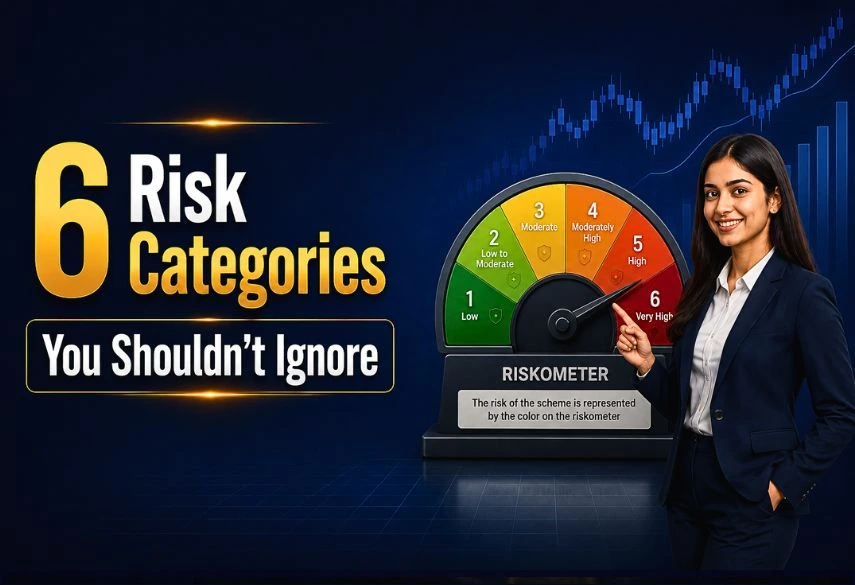
SEBI requires mutual fund schemes to display a Riskometer to communicate the assessed risk level of the scheme. The Riskometer should be reviewed together with the scheme objective, portfolio and investor’s risk capacity. (SEBI Investor)
Fund-house process
Evaluate whether the asset management company has:
- A documented credit-research process
- A consistent duration strategy
- Adequate risk controls
- Transparent portfolio disclosures
- Experience managing debt-market stress
- A stable investment team
Who Should Consider Debt Mutual Funds?
Debt mutual funds may be considered by investors who:
- Want debt exposure within a diversified portfolio.
- Can accept market-linked fluctuations.
- Have a clearly defined investment horizon.
- Understand the selected fund category.
- Need short-term or medium-term cash management.
- Want professional management of fixed-income securities.
- Are building a relatively conservative allocation.
- Want to balance a portfolio dominated by equity.
Suitability depends on the actual scheme and the investor’s overall financial position.
Who Should Avoid Debt Mutual Funds?
A debt mutual fund may not be suitable when an investor:
- Needs a guaranteed return.
- Cannot tolerate any decline in capital value.
- Does not understand interest-rate or credit risk.
- Is investing emergency money in an unsuitable long-duration category.
- Selects funds only from past-return rankings.
- Needs the money before the recommended holding period.
- Assumes that all debt funds have the same risk level.
- Is attracted to a high yield without examining credit quality.
- Requires DICGC-style deposit insurance.
Taxation of Debt Mutual Funds
Debt mutual fund taxation depends on factors including:
- Date of purchase
- Date of redemption
- Portfolio composition
- Whether the fund meets the definition of a specified mutual fund
- Investor category and residential status
- Applicable tax year
- Changes in tax law
For units of specified mutual funds acquired on or after 1 April 2023, gains have generally been treated as short-term capital gains and taxed at the investor’s applicable rate, irrespective of the holding period.
From FY 2025–26, the definition focuses on mutual funds that invest more than 65% of their proceeds in debt and money-market instruments, as well as specified fund-of-fund structures investing in such funds. (Etds)
India’s Income-tax Act, 2025 came into effect from 1 April 2026, while earlier tax years continue to be governed through the transition provisions applicable to the Income-tax Act, 1961. Investors should therefore verify the rules applicable to their exact acquisition date, redemption date and tax year. (Income Tax Department)
Units acquired before 1 April 2023 can have different holding-period and capital-gains treatment. Listed and unlisted units may also be classified differently under the applicable provisions.
Because tax regulations can change, investors should check current official guidance or consult a qualified tax adviser before making a redemption decision.
Common Debt Fund Investment Mistakes
Choosing a fund from recent returns
A fund may have generated a strong recent return because it took greater duration or credit risk.
Past performance alone does not explain the risk taken to earn the return.
Ignoring the investment horizon
Short-term money should not be placed in a long-duration category solely because its recent return appears higher.
Treating every debt fund as safe
An overnight fund and a credit risk fund have very different portfolios and risk characteristics.
Looking only at the credit rating
Credit ratings are important, but they can change. Investors must also examine concentration, liquidity and maturity.
Assuming a high YTM guarantees a high return
A higher YTM may reflect additional credit, duration or liquidity risk.
Ignoring expenses and exit loads
A small difference in expenses can materially affect net returns over time, especially in lower-return categories.
Comparing debt funds with equity funds
Debt and equity funds serve different portfolio functions. Their performance should not be assessed using identical expectations. Investing without reading the scheme documents.
Before investing, review:
- Scheme Information Document
- Key Information Memorandum
- Factsheet
- Portfolio disclosure
- Riskometer
- Exit-load terms
- Expense ratio
- Tax implications
A Practical Debt Fund Selection Checklist
Before investing, answer these questions:
- What is the exact purpose of the investment?
- When will the money be needed?
- Can the investor tolerate a temporary NAV decline?
- Which debt fund category matches the time horizon?
- What is the portfolio’s credit-quality profile?
- How concentrated is the portfolio?
- What are its Macaulay and modified durations?
- What is the average maturity?
- What does the current Riskometer show?
- What is the expense ratio?
- Is an exit load applicable?
- Has the fund changed its strategy frequently?
- Is the investment being selected only because of recent returns?
- What tax treatment is likely to apply?
- Does the investment fit the investor’s total asset allocation?

Conclusion
A debt mutual fund can provide exposure to bonds, government securities and money-market instruments through a professionally managed portfolio. It may be useful for cash management, short- and medium-term goals, diversification and the debt component of a broader investment portfolio.
However, lower volatility does not mean zero risk. Debt funds carry interest-rate, credit, liquidity, reinvestment, concentration and inflation risks. The level of risk can vary substantially between an overnight fund, a corporate bond fund, a gilt fund and a credit risk fund.
The right approach is to define the investment horizon first, select the appropriate category and then evaluate credit quality, duration, concentration, expenses, exit load and the current Riskometer.
Debt mutual funds should not be chosen merely because they appear safer than equities or because a particular scheme has delivered the highest recent return. Every investment should be aligned with the investor’s goals, liquidity requirements, risk tolerance and tax position.
(Sources: Livemint, ET Money, Forbes, Motilal Oswal, The Hindu Business Line, Equity Reseach India)

DISCLAIMER: This blog is NOT any buy or sell recommendation. No investment or trading advice is given. The content is only for educational purposes. Always discuss with your SEBI-registered financial advisor for investment-related decisions.